Holes in Window Screens: Quick Fixes, Long-Term Solutions & When to Call Screen Master Door & Window
Key Takeaways
- Small holes in window screens can be patched effectively, but large tears or brittle mesh typically require a full new screen panel for lasting results.
- Your repair method depends on hole size, screen material (fiberglass, aluminum, pet-resistant, or solar), and overall screen age.
- DIY patches work well for a season or two, but professional rescreening delivers the cleanest appearance and longest lifespan.
- Screen Master Door & Window offers mobile screen repair and replacement across Greater Los Angeles, often completing jobs in a single visit.
- This guide covers tools, repair steps, and decision points to help you know when to DIY and when to call (323) 313-8167.
Why Holes in Window Screens Matter in Los Angeles Homes
Holes in window screens let mosquitoes, flies, and dust invade your living space—especially during warm LA evenings and Santa Ana wind events. The global windows and doors industry, which includes screen enclosures, was valued at USD 203.6 billion in 2025, with the residential side accounting for USD 119.4 billion. This massive market exists because windows and screens are essential to home comfort.
A window screen consists of three components: mesh material, an aluminum or vinyl frame, and spline (a rubber cord holding everything together). Holes in window screens are caused by pets, pests, or environmental wear—common culprits include pet claws, kids pushing on screens, sun damage, and moving furniture through open windows.
Your options include DIY patches for small fixes, partial or full rescreening for larger damage, and professional mobile service. Screen Master Door & Window has served Greater Los Angeles for over 20 years, bringing expert screen repair directly to your home.
Assessing the Damage: Small Holes vs. Large Tears
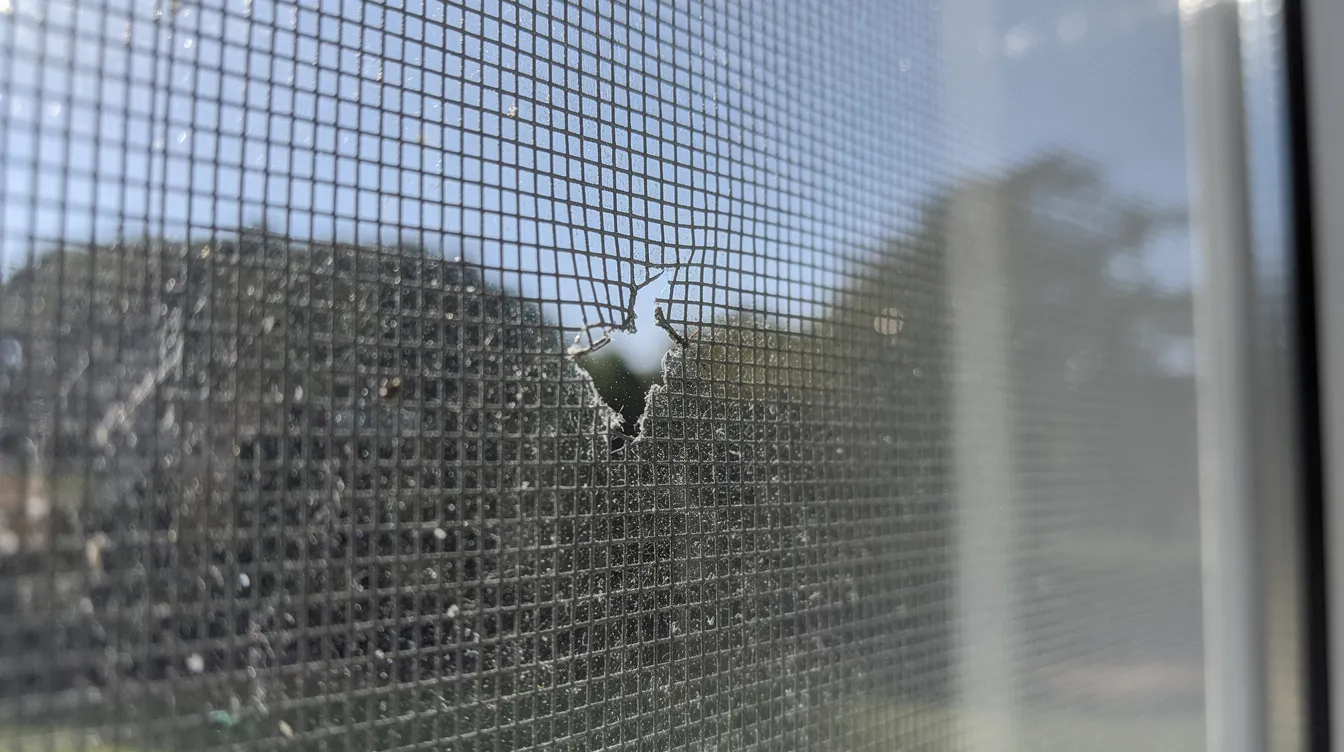
Assessing the damage is the first step in repairing screen holes, as the size of the hole and the type of screen material will determine the best repair method. Inspect each window screen in good daylight, checking both inside and outside surfaces.
Damage Assessment Checklist:
- Count the number of holes per screen
- Note location (center vs. near frame edges)
- Test if the screen material feels brittle or flexible
- Measure tear length and check for frayed edges
Small holes include pinholes, cigarette burns, and pet claw punctures under 1 inch. Large tears are rips longer than 2-3 inches, frayed edges, or missing mesh. Replacing the entire mesh is recommended if damage exceeds 3 inches or there are multiple large tears.
Example: A 2015 aluminum-framed window in Pasadena with several cat claw holes near the bottom edge would typically qualify for patching—unless the damage covers more than 15-20% of the panel.
Understanding Window Screen Material Types
Repair method and patch choice depend heavily on your existing screen material. Using the correct materials for the specific type of screen is crucial; mismatched materials can lead to ineffective repairs and further damage.
| Material | Characteristics | Repair Considerations |
|---|---|---|
| Fiberglass | Soft, flexible, common post-2000 | Easiest to patch and rescreen |
| Aluminum | Rigid, found on older homes | Creases permanently, harder to patch |
| Pet-resistant | Vinyl-coated polyester | Requires matching specialty patches |
| Solar mesh | Heat and glare reducing | Specialty material needed |
Fiberglass mesh is the most common type of screen material used due to its flexibility and ease of use. Aluminum screens are more rigid and durable compared to fiberglass, but they can crease permanently if not handled carefully. Continuous sun exposure can cause fiberglass and plastic mesh to become brittle, leading to tears.
Quick identification tips: Soft feel indicates fiberglass; stiff feel suggests aluminum. Charcoal coloring is typical for standard fiberglass screens, while silver indicates metal screen material.
Tools and Materials You’ll Need for Window Screen Repair
Proper preparation saves time and prevents weak, short-lived repairs. Repairing a window screen is a relatively simple and cost-effective DIY task that can save you from having to replace the entire screen.
Essential Tools:
- Sharp utility knife and scissors
- Flat-head screwdriver
- Spline roller for complete rescreening
- Tape measure (precision matters)
- Mild cleaner or rubbing alcohol
Repair Materials:
- Adhesive screen patch kits
- Screen repair tape
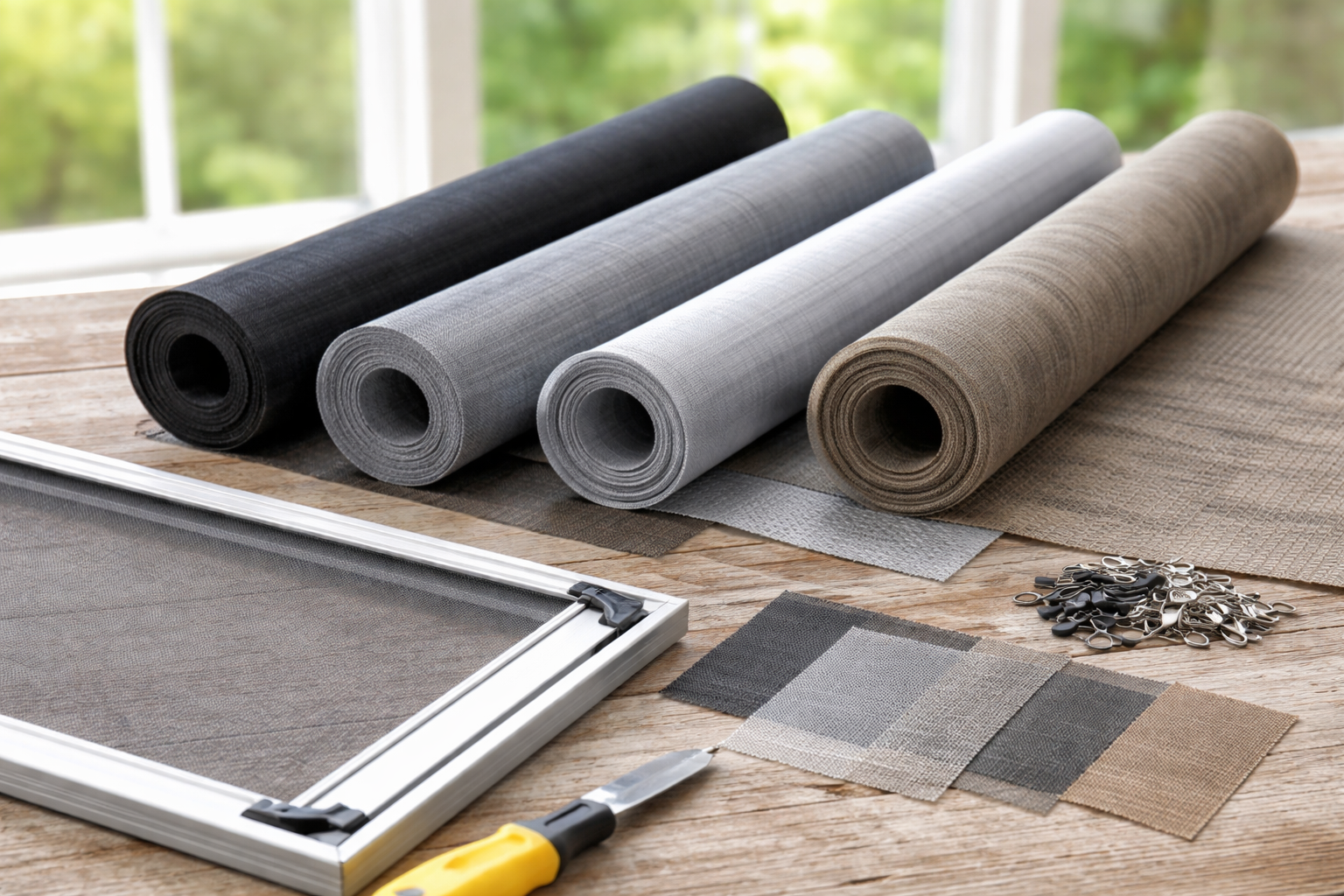
- Matching mesh squares or replacement screen rolls
- Various spline sizes and corner keys
Customers in Greater Los Angeles can skip buying tools by scheduling Screen Master’s mobile workshop—we arrive with all materials and a full selection of colors on-site.
DIY Fixes for Small Holes in Window Screens
Minor holes in window screens can often be fixed without removing the screen from the frame. The goal is to restore your bug barrier quickly. For very small punctures or tears (less than 1/8 inch), clear adhesives can be used instead of a physical patch. Clear nail polish can bond fibers together over holes in fiberglass or vinyl screens.
Clean and dry the damaged area before applying any patch or adhesive—this ensures proper bonding. These methods work best on reasonably new fiberglass or pet-resistant mesh.
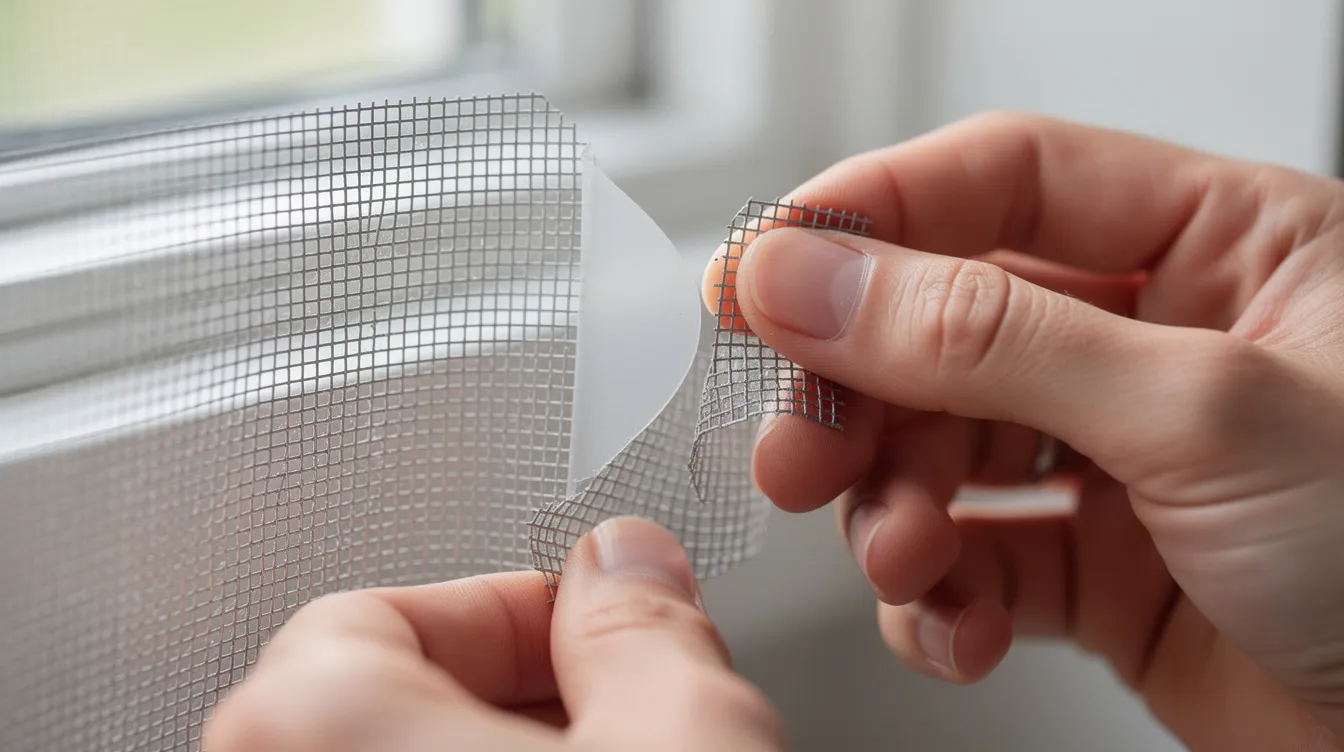
Adhesive Patches and Screen Repair Tape
Adhesive screen patches are ideal for quick, small, or medium-sized holes in screens. If the hole is too large for glue but smaller than 2-3 inches, a patch is the most effective method.
Step-by-step instructions:
- Clean the damaged section with rubbing alcohol
- Cut the screen patch at least 1/2 inch larger than the hole on all sides
- Round the corners with scissors to prevent peeling
- Press firmly for 30 seconds to secure the adhesive
Apply patches on both sides of the screen for extra strength on high-use windows. On dark charcoal screens, black patches blend better than silver or white patch material. These repairs typically last one to two seasons in sunny Southern California.
Sewing or Weaving Small Tears
Sewing is a low-cost repair method for straight, clean tears under 2 inches on fiberglass mesh. Use a curved needle and UV-resistant outdoor thread matching the screen color.
Overlap the tear edges slightly and create tight stitching at least 1/4 inch beyond each end. This method is not recommended for aluminum window screens because the wire can break and leave sharp edges.
Good candidate: A tear from moving a plant through a bedroom window screen—clean cuts respond well to careful thread work with patience.
Heat-Based and Iron-On Screen Patches
Iron-on screen patches create a stronger bond on holes up to the size of a quarter. Effective methods for repairing window screen holes include using adhesive screen patches or heat-activated patches.
Safety tips:
- Use low to medium heat setting, no steam
- Place parchment paper between iron and patch
- Avoid plastic window frames that could warp
- Ensure at least 1 inch of overlap around the entire hole
Test on a corner first to ensure no melting occurs. These patches are more visible than a new screen but can buy several years of extra use.
Repairing Larger Damage: When You Need a New Screen Panel
Once tears become long, edges fray, or multiple holes appear, patching looks messy and fails quickly. For small holes, an adhesive screen patch can be a quick and effective solution, while larger tears may require partial rescreening to ensure a durable repair.
Signs you need a new screen panel:
- Long slashes or missing corners of mesh
- Sagging in the middle of the panel
- Mesh that crumbles when touched
- Prolonged sunlight exposure makes fiberglass screens brittle, causing them to disintegrate
Re-screening the frame with new mesh and new screen spline is often necessary for significant damage. Screen Master Door & Window typically completes residential window rescreening in one visit.
Removing the Damaged Screen and Spline
Carefully remove the screen frame from the window, noting any clips or spring-loaded tabs. Locate the spline groove and gently pry up one end with a flat-head screwdriver.
Pull the spline out in one continuous piece if possible—this helps you match the size at the hardware store. Lift out the old mesh and vacuum debris from the channel. Inspect frame corners for cracks and replace corner keys if needed. Proper care during installation and removal of screens helps avoid bending frames and reducing stress on the mesh.
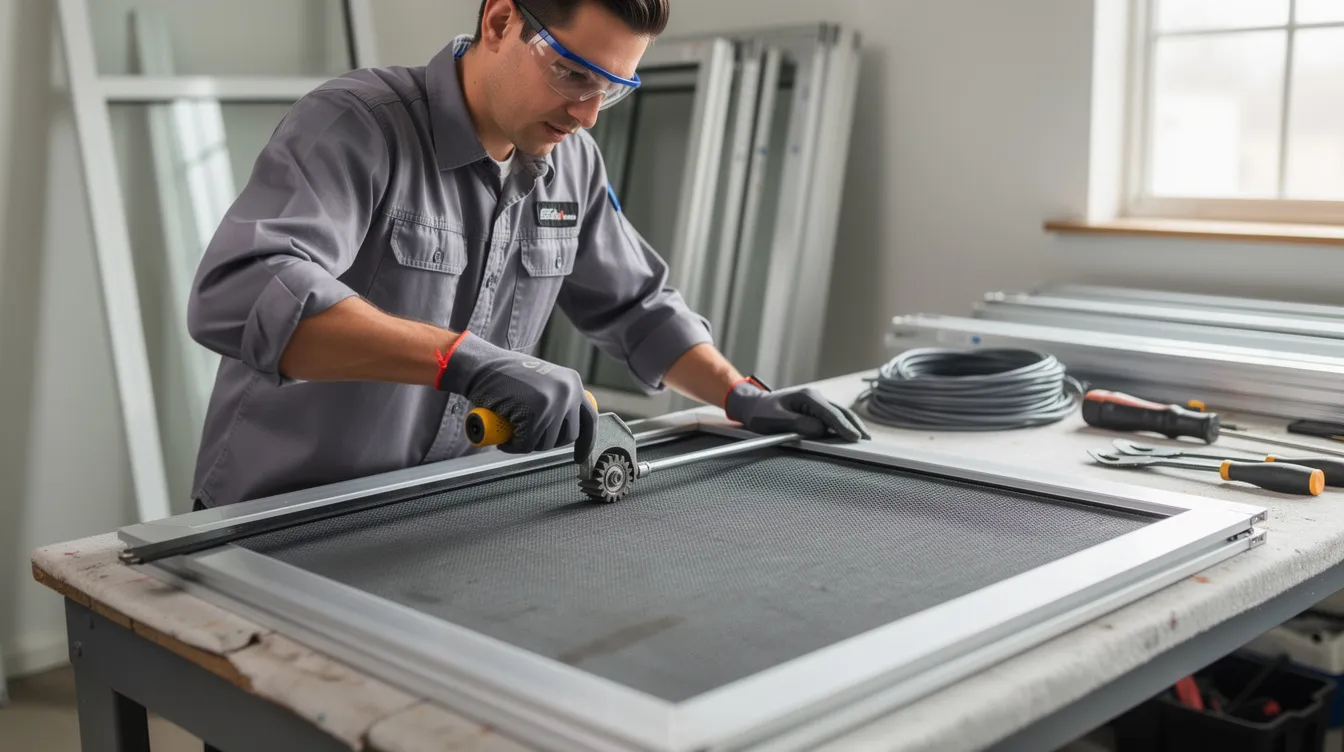
Installing the New Screen Material
Cut new screen material several inches larger than the frame to allow for tensioning. Position the mesh with the weave straight, then use a spline roller to press new spline into the groove, starting on the shortest side.
Work opposite sides in sequence—top, bottom, then left and right—while gently pulling the screen material taut. Roll from one side to the opposite side systematically. Trim excess screen at a shallow angle with a sharp utility knife along the outside edge of the spline.
Aluminum mesh requires extra care to avoid kinks, while fiberglass is more forgiving but can stretch if over-pulled.
When to Skip DIY and Call Screen Master Door & Window
Many homeowners handle basic repairs, but not every situation is safe or cost-effective for DIY. Repairing a window screen can be a cost-effective DIY task, potentially saving homeowners from the expense of a full replacement—but extensive damage changes the equation.
The door and window repair service market, which includes screen maintenance, was valued at around USD 0.6 billion in 2023 and is projected to reach USD 1.32 billion by 2035. This growth reflects homeowners increasingly recognizing professional value.
Screen Master’s mobile service covers Rosemead, Pasadena, Glendale, Burbank, San Gabriel Valley, and Greater Los Angeles. We bring standard fiberglass, pet-resistant, solar, and security mesh options on-site. Call (323) 313-8167 for a quick quote.
Safety, Structural Issues, and Commercial Properties
Avoid ladder work on upper-story windows without proper equipment—fall risk isn’t worth the savings. Bent, corroded, or twisted frames require expert evaluation and possible frame replacement.
Screen Master Door & Window regularly handles apartment complexes, HOA communities, and storefronts needing dozens of matching window screens. Professional help is valuable for matching architectural styles, custom colors, or non-standard window sizes from mid-century or 1920s homes.
Professional installation includes a workmanship warranty, providing peace of mind compared to experimental DIY fixes.
When a Full Rescreen or Upgrade Makes More Sense
Most standard fiberglass window screens last 7-12 years in sunny Los Angeles before UV exposure makes them brittle. Full rescreening is often cheaper per unit than repeated individual repairs when many screens show damage.
Using thicker, vinyl-coated polyester mesh can provide pet resistance for window screens. Upgrading to thicker, more durable screens or installing protective guard panels can enhance durability against pets.
Specialty screen materials, such as pet-resistant and solar screens, require matching the patch material to the original to maintain their unique properties and durability. Screen Master can mix materials—standard mesh on shaded sides, solar mesh on sun-exposed windows—for a complete whole-home solution.
Preventing Future Holes in Window Screens
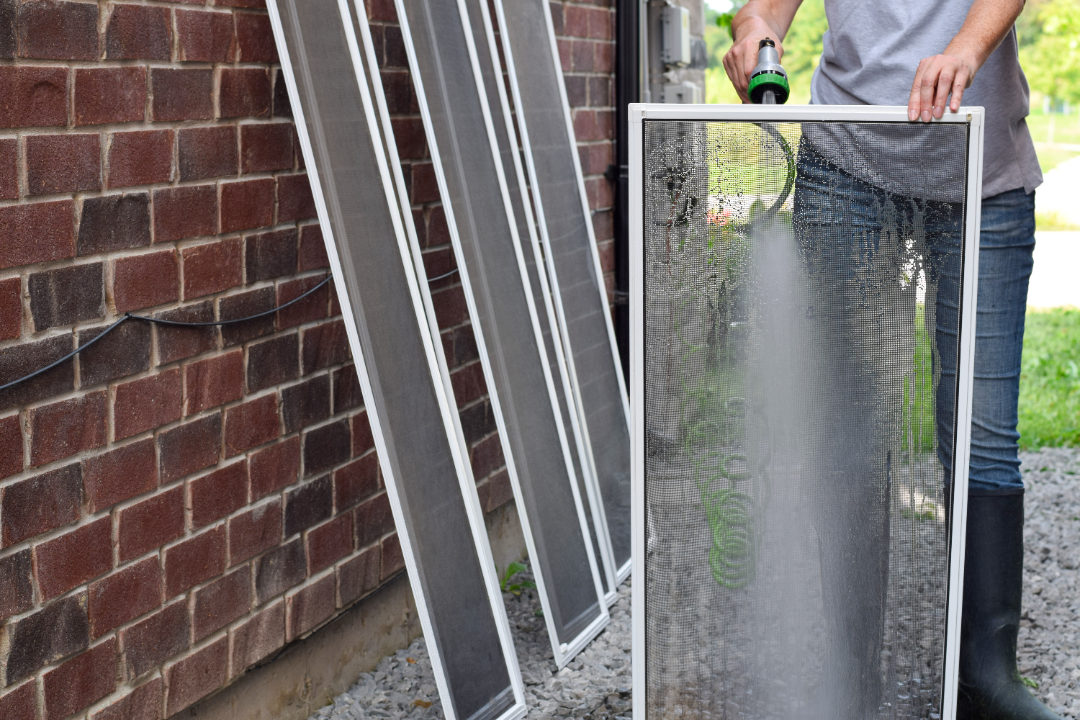
A little maintenance dramatically extends screen life and saves money on future repairs. Regularly cleaning screens can help remove corrosive pollutants and inspect for early signs of damage.
Prevention tips:
- Clean seasonally with soft brush and mild soap to cover dust, pollen, and coastal salt
- Train pets away from screens; consider putting pet grilles on low windows
- Never lean furniture or ladder legs against screens
- Conduct spring and fall walkthroughs to catch new damage early
It’s important to match the repair materials to the existing screen type to ensure a durable and visually appealing repair when small fixes are needed.

FAQ About Holes in Window Screens
How do I know if I should patch a hole or replace the whole window screen?
One or two small holes under 1 inch in tight, flexible mesh are good candidates for a simple patch. Multiple holes, long tears, or mesh that cracks under light pressure mean it’s time for a new screen panel. As a rule of thumb: if more than 15-20% is damaged, replacement looks better and lasts longer. Send a photo to Screen Master or call (323) 313-8167 for an honest answer.
Can I repair aluminum window screens the same way as fiberglass screens?
The basic concepts are similar, but metal screen mesh is less forgiving—it bends, creases, and leaves sharp edges when cut. Adhesive patches don’t blend as well on aluminum and peel more easily on oxidized surfaces. Treat aluminum repair as a temporary fix and consider full rescreening with fresh material. Screen Master can replace screens while keeping original frame style consistent.
How much does it typically cost to repair or replace a window screen in Los Angeles?
Single DIY patch kits typically cost under $20. Professional window rescreening per panel is modest compared to full window replacement, with price varying by screen size, frame condition, and material choice. Customers with 5+ damaged screens often find professional mobile service more economical than buying tools individually. Contact Screen Master Door & Window for a free, no-obligation quote.
Will upgrading my window screens change how much light comes into my home?
Standard fiberglass replacement screens won’t noticeably change interior light levels. Solar screens and some security meshes slightly reduce visible light but significantly lower heat and glare on west-facing windows. Balance comfort and brightness by using solar mesh only on problem windows. Screen Master technicians show sample swatches on-site so you can see the difference before deciding.
Do I have to remove my window screens before a mobile repair service arrives?
Homeowners don’t need to remove screens ahead of time—Screen Master’s technicians safely remove and reinstall them. Clear furniture and fragile items from window areas to create safe workspace and provide access. For large commercial jobs, pre-planning access and parking helps visits go faster. Most residential projects are complete in a single visit with our mobile workshop on-site.