
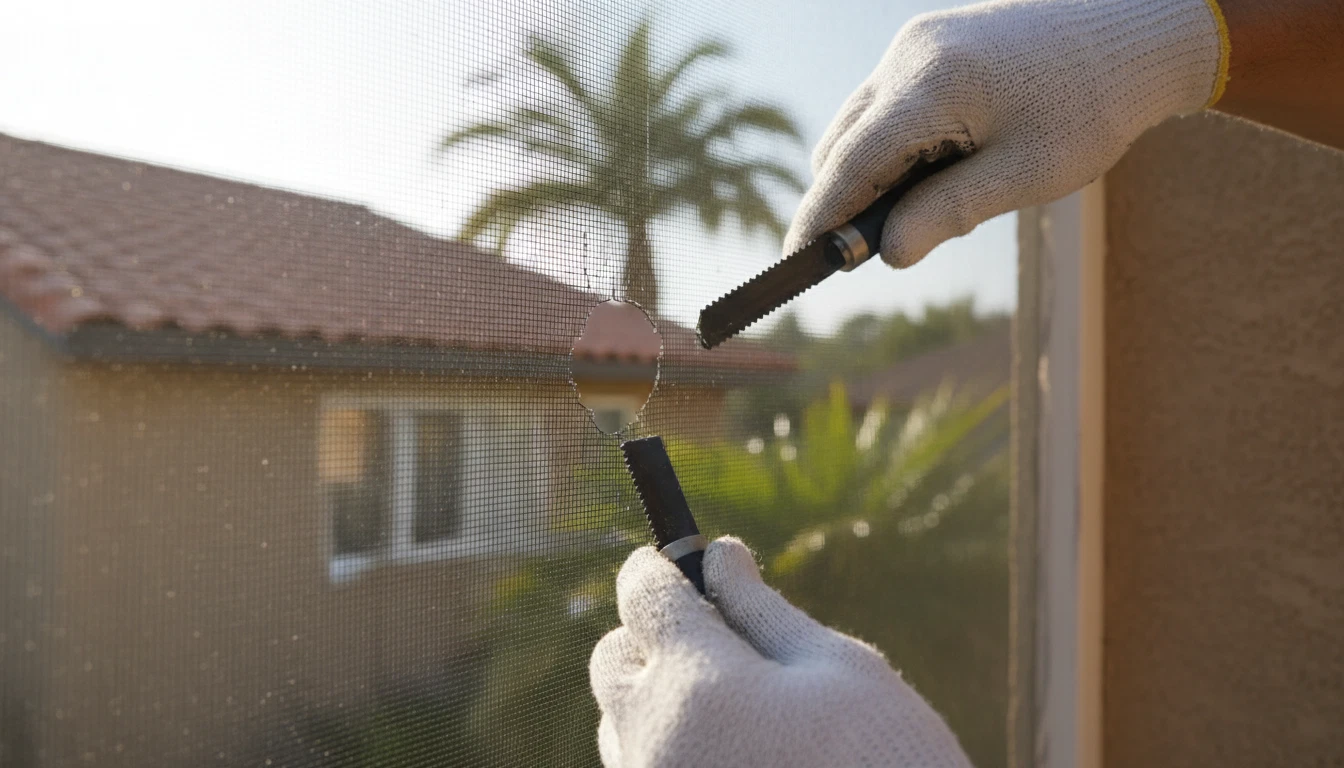
Small holes in window screens can be patched effectively, but large tears or brittle mesh typically require a full new screen panel. Learn which repair method is right for your situation — and when to call a professional.
Key Takeaways
- Small holes in window screens can be patched effectively, but large tears or brittle mesh typically require a full new screen panel for lasting results.
- Your repair method depends on hole size, screen material (fiberglass, aluminum, pet-resistant, or solar), and overall screen age.
- DIY patches work well for a season or two, but professional rescreening delivers the cleanest appearance and longest lifespan.
- Screen Master Door & Window offers mobile screen repair and replacement across Greater Los Angeles, often completing jobs in a single visit.
Why Holes in Window Screens Matter in Los Angeles Homes
Holes in window screens let mosquitoes, flies, and dust invade your living space — especially during warm LA evenings and Santa Ana wind events. A window screen consists of three components: mesh material, an aluminum or vinyl frame, and spline (a rubber cord holding everything together). Holes are caused by pets, pests, or environmental wear — common culprits include pet claws, kids pushing on screens, sun damage, and moving furniture through open windows.
Assessing the Damage: Small Holes vs. Large Tears
Assessing the damage is the first step. Inspect each window screen in good daylight, checking both inside and outside surfaces.
Damage Assessment Checklist:- Count the number of holes per screen
- Note location (center vs. near frame edges)
- Test if the screen material feels brittle or flexible
- Measure tear length and check for frayed edges
Small holes include pinholes, cigarette burns, and pet claw punctures under 1 inch. Large tears are rips longer than 2–3 inches, frayed edges, or missing mesh. Replacing the entire mesh is recommended if damage exceeds 3 inches or there are multiple large tears.
Understanding Window Screen Material Types
| Material | Characteristics | Repair Considerations |
|---|---|---|
| Fiberglass | Soft, flexible, common post-2000 | Easiest to patch and rescreen |
| Aluminum | Rigid, found on older homes | Creases permanently, harder to patch |
| Pet-resistant | Vinyl-coated polyester | Requires matching specialty patches |
| Solar mesh | Heat and glare reducing | Specialty material needed |
DIY Fixes for Small Holes in Window Screens
Adhesive Patches and Screen Repair Tape
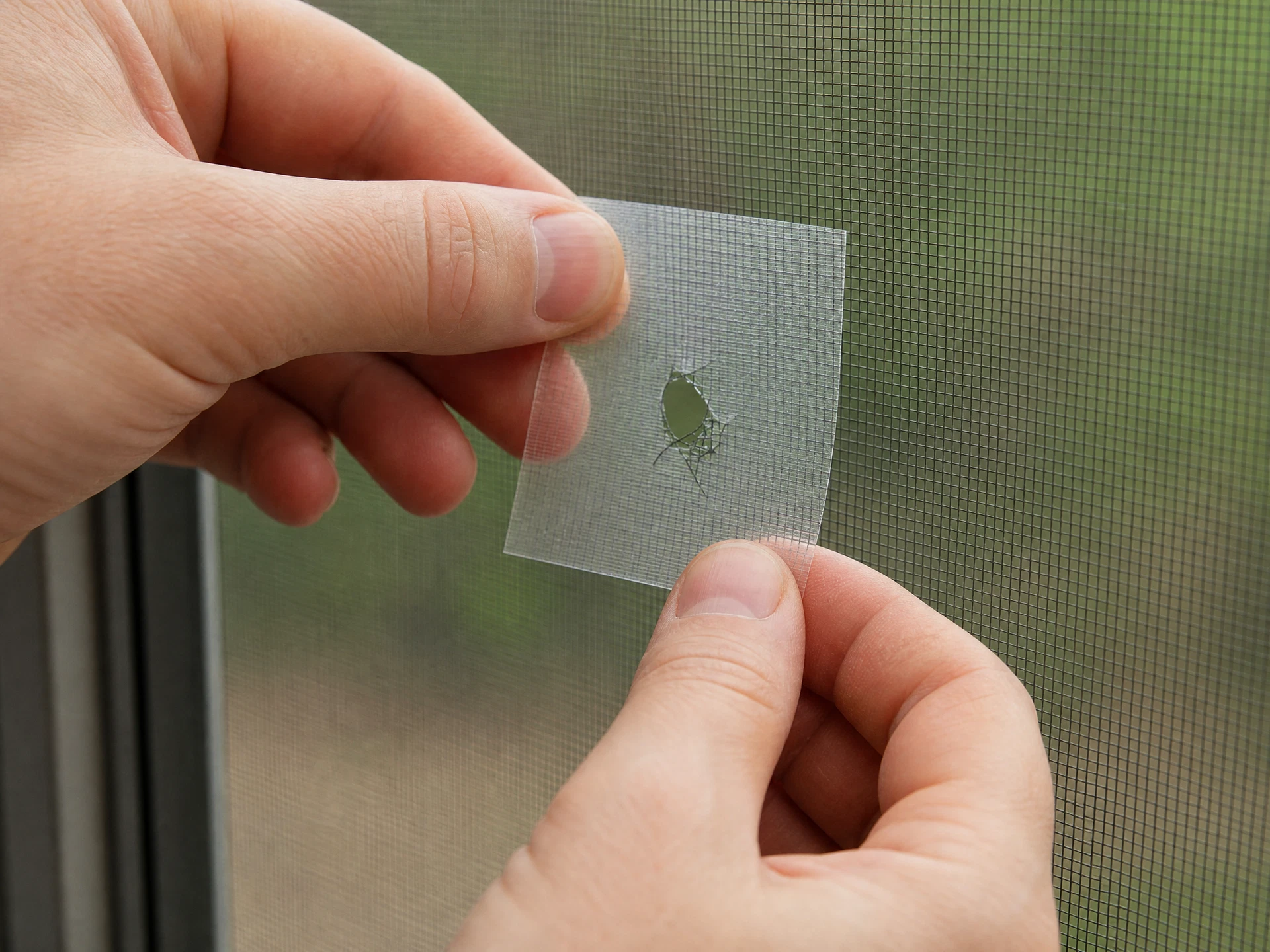
Adhesive screen patches are ideal for quick, small, or medium-sized holes. Step-by-step:
Apply patches on both sides of the screen for extra strength. These repairs typically last one to two seasons in sunny Southern California.
Sewing or Weaving Small Tears
Sewing is a low-cost repair method for straight, clean tears under 2 inches on fiberglass mesh. Use a curved needle and UV-resistant outdoor thread matching the screen color. This method is not recommended for aluminum screens because the wire can break and leave sharp edges.
Heat-Based and Iron-On Screen Patches
Iron-on screen patches create a stronger bond on holes up to the size of a quarter. Safety tips:
- Use low to medium heat setting, no steam
- Place parchment paper between iron and patch
- Avoid plastic window frames that could warp
- Ensure at least 1 inch of overlap around the entire hole
Repairing Larger Damage: When You Need a New Screen Panel
Once tears become long, edges fray, or multiple holes appear, patching looks messy and fails quickly. Signs you need a new screen panel:
- Long slashes or missing corners of mesh
- Sagging in the middle of the panel
- Mesh that crumbles when touched
- Prolonged sunlight exposure makes fiberglass screens brittle
Re-screening the frame with new mesh and new screen spline is often necessary for significant damage. Screen Master Door & Window typically completes residential window rescreening in one visit.
When to Skip DIY and Call Screen Master Door & Window
Many homeowners handle basic repairs, but not every situation is safe or cost-effective for DIY. Call us when:
- You have upper-story windows requiring ladder work
- Frames are bent, corroded, or twisted
- You have multiple screens needing replacement
- You want specialty mesh (pet-resistant, solar, security)
- You need custom sizes for non-standard windows
Screen Master's mobile service covers Rosemead, Pasadena, Glendale, Burbank, San Gabriel Valley, and Greater Los Angeles. We bring standard fiberglass, pet-resistant, solar, and security mesh options on-site. Call (323) 313-8167 for a quick quote.
Preventing Future Holes in Window Screens
- Clean seasonally with soft brush and mild soap
- Train pets away from screens or upgrade to pet-resistant mesh
- Avoid leaning objects against screens
- Inspect screens after Santa Ana wind events
- Replace screens every 7–12 years in sunny Los Angeles before UV exposure makes them brittle
Need Window or Door Screen Services?
Screen Masters provides mobile screen repair, replacement, and installation across Greater Los Angeles. Free estimates, 7 days a week.